
Currently Empty: ₨ 0
Magnesium Uses, Benefits, Side Effects, Rich Food & More
Magnesium is an important mineral that is necessary for many metabolic processes in the human body. Despite its significance, a lack of it causes a

Currently Empty: ₨ 0
Magnesium is an important mineral that is necessary for many metabolic processes in the human body. Despite its significance, a lack of it causes a number of health problems for many people worldwide. Magnesium helps produce energy, keeps bones healthy, maintains a steady heartbeat, and promotes neuron and muscle function. Sadly, between 10% and 30% of people worldwide suffer from magnesium insufficiency; rates are significantly greater for those with poor diets, long-term medical conditions, or particular lifestyle choices.
Magnesium is a chemical element with the symbol Mg and atomic number 12. It’s the 4th most prevalent mineral in the human body, involved in over 300 enzymatic reactions, including protein synthesis, muscle and nerve function, blood glucose control, and blood pressure regulation. It also helps manage blood sugar and blood pressure.
According to the National Institutes of Health (NIH), the recommended daily intake varies by age and gender:
Age Group | Male (mg/day) | Female (mg/day) |
1–3 years | 80 | 80 |
4–8 years | 130 | 130 |
9–13 years | 240 | 240 |
14–18 years | 410 | 360 |
19–30 years | 400 | 310 |
31+ years | 420 | 320 |
Pregnant Women | — | 350-360 mg |
Athletes/Active Individuals | Up to 500 mg | — |
Type of Magnesium | Common Uses/Notes | Form Available |
Magnesium Oxide | Often used as a laxative or antacid; less bioavailable for other uses | Tablets, Capsules |
Magnesium Citrate | Well-absorbed; commonly used for constipation | Tablets, Powder |
Magnesium Glycinate | Known for calming effects; may help with anxiety and sleep | Tablets, Capsules |
Magnesium Chloride | Good absorption; used for general supplementation | Tablets, Capsules |
Magnesium Threonate | May support cognitive function; newer supplement | Capsules, Powder |
Magnesium Aspartate | Well-absorbed; general use | Capsules, Powder |
Magnesium Lactate | Gentle on the stomach; suitable for those with GI sensitivity | Capsules |
Magnesium Sulfate | Also known as Epsom salt; mainly used externally or in medical settings | Bath salts, IV |
Magnesium Malate | May be better absorbed; sometimes used for energy and muscle pain | Tablets, Capsules |
Magnesium Taurate | Potential benefits for heart health | Tablets, Capsules |
Magnesium Orotate | Being studied for gut and mental health; more research needed | Tablets, Capsules |
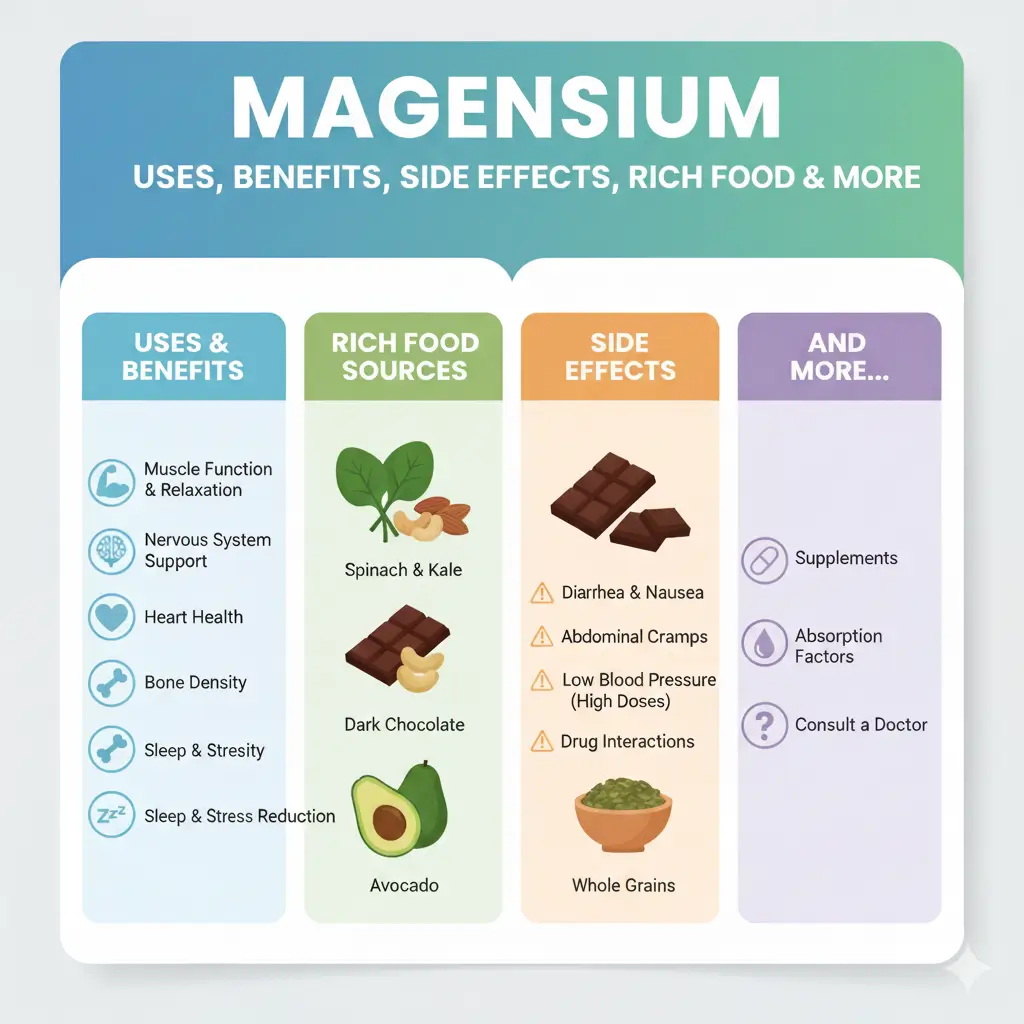
Common health benefits of magnesium are
Here are some common uses of magnesium
Here are the top magnesium-rich foods:
Use with vitamin D (sunlight, fatty fish).
Avoid excessive alcohol and caffeine (they deplete magnesium).
Soak nuts and seeds to reduce phytic acid, which inhibits absorption.
Magnesium deficiency, medically called hypomagnesemia, is a condition where the amount of magnesium in the blood is lower than normal. Low blood magnesium levels, caused by various illnesses or drugs, characterize magnesium deficiency. The primary symptoms are low appetite, nausea or vomiting, muscle spasms or tremors, and abnormal heart rhythms.
Magnesium supplements boost magnesium intake, which supports a variety of body activities from muscle wellness to producing energy. Magnesium is required for energy production, muscle and neuron function, blood pressure regulation, bone health, and the synthesis of protein and DNA.
Magnesium is an important mineral that helps with more than 300 biochemical processes in the body. These include energy production, muscle and nerve function, bone health, blood sugar control, and heart rhythm. Magnesium deficiency affects 10–30% of people worldwide especially those who eat poorly, have long-term illnesses, or have certain lifestyles. Dietary sources of magnesium include leafy greens, nuts, seeds, whole grains, legumes, fruits, fish, dark chocolate, soy products, and dried beans. Adequate vitamin D intake, reducing alcohol and caffeine consumption, and soaking nuts and seeds can improve absorption. While magnesium is generally safe, excessive intake can cause diarrhea, nausea, stomach cramps, low blood pressure, irregular heartbeat, breathing problems, and kidney problems. Magnesium deficiency, known as hypomagnesemia, can cause fatigue, cramps, numbness, anxiety, poor appetite, and abnormal heart rhythms.
Magnesium is an important mineral that is necessary for many metabolic processes in the human body. Despite its significance, a lack of it causes a

Johar Town, Lahore, 54000
Monday – Saturday: 9:00 am – 5:00pm
Sunday: Closed
Copyright © 2026 Vitafit– All Rights Reserved. Designed by Web Designing Company

WhatsApp us